
Introducing the
NewDEL™ Fiber-coupled LED
Meticulously engineered photonic tools built to advance the goals of our customers, whether they are forging new paths in scientific discovery or implementing an ongoing project.
Illuminating Innovation
The flexibility you want, the performance you need
When it comes to applications like spectroscopy, optogenetics, and photodynamic therapy, the quality of the light source directly impacts the value of the results. As users of photonic instrumentation increasingly switch to fiber-coupled LEDs, they look for sources that produce stable, high-power output, at a range of wavelengths. NewDEL™ fiber-coupled LEDs meet those performance goals while also empowering researchers and innovators to target operation to each project, whether that’s manual configuration or fully automated remote control. With being engineered for customization, they can also be tailored to meet specialty requirements upon request.
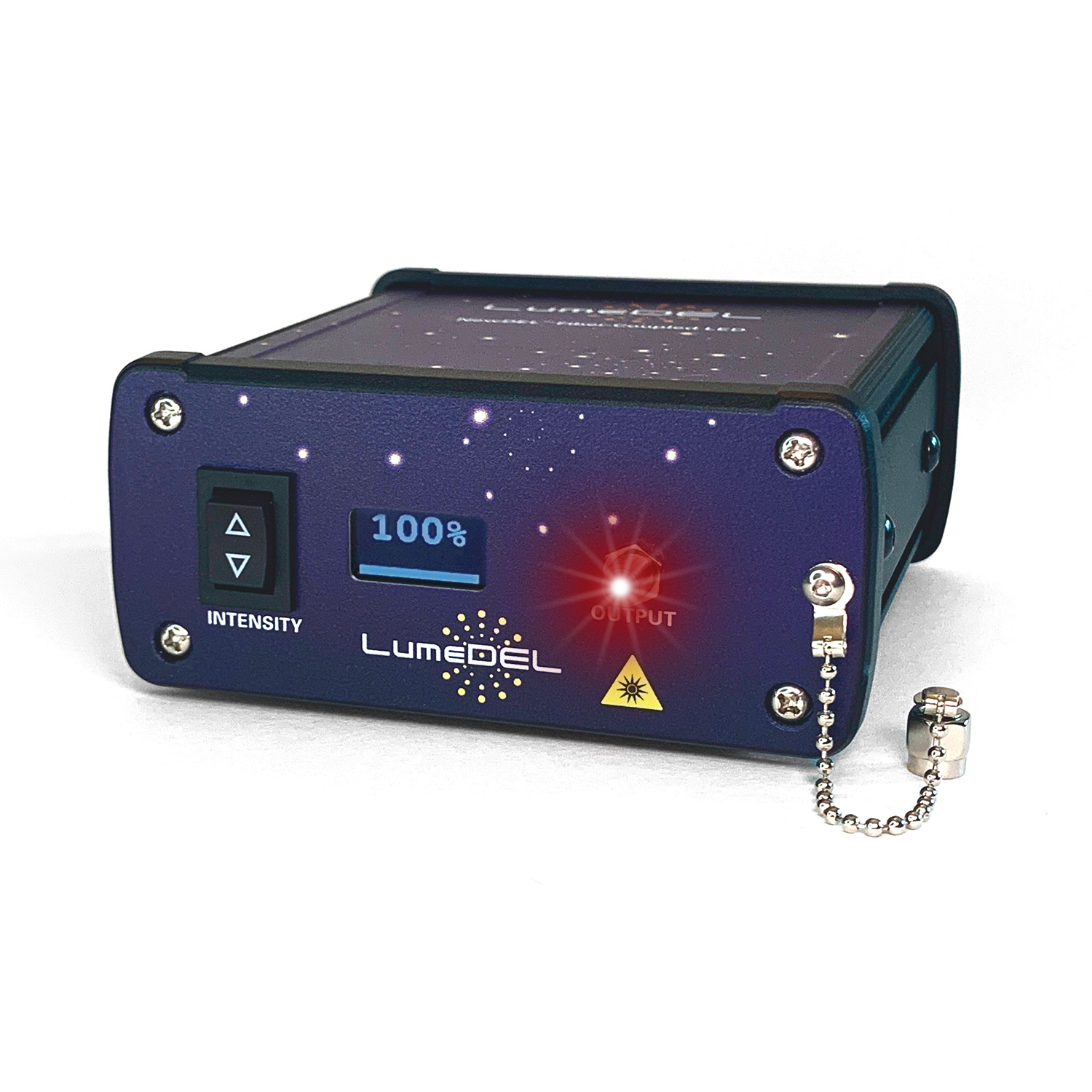
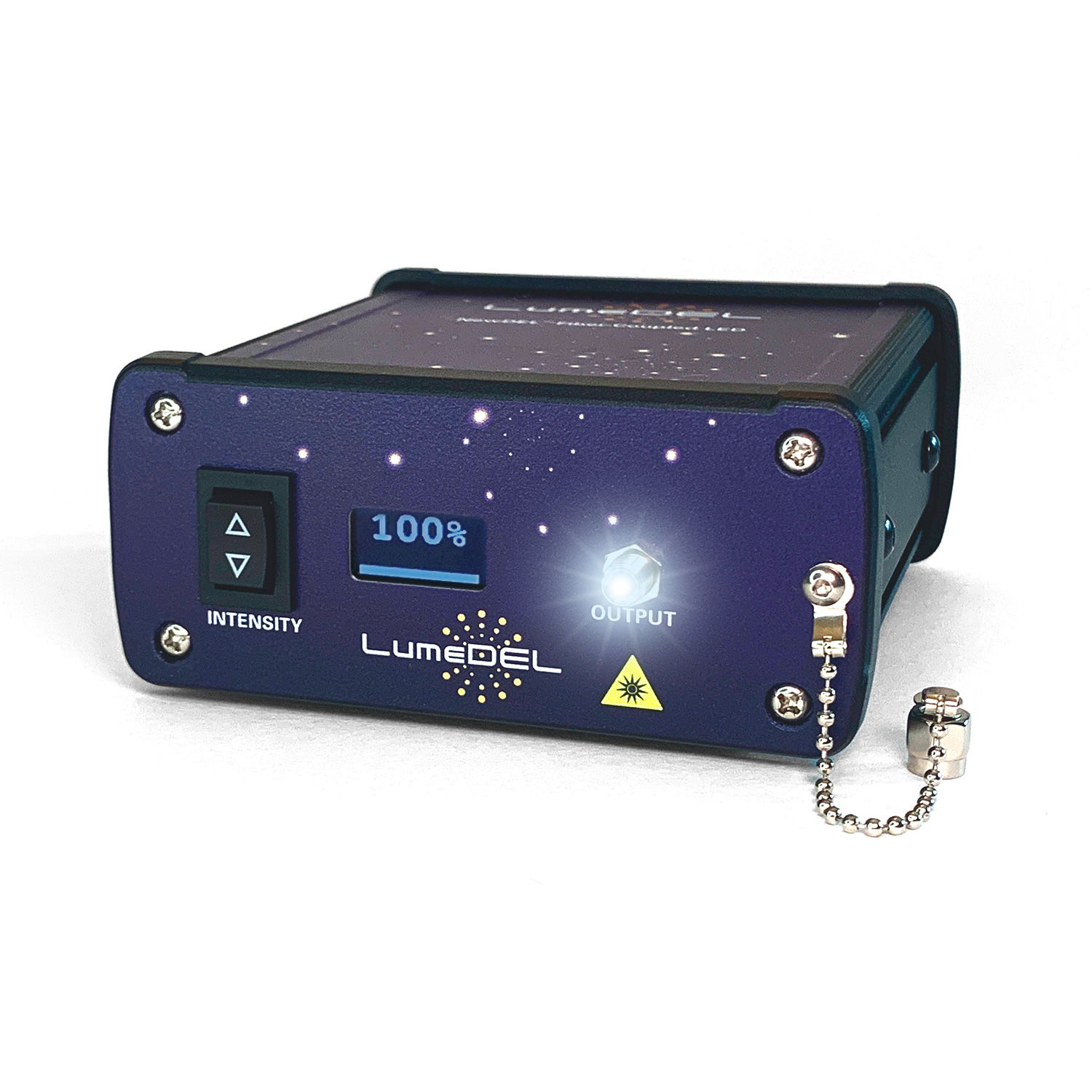
Meet the NewDEL™ fiber-coupled LED
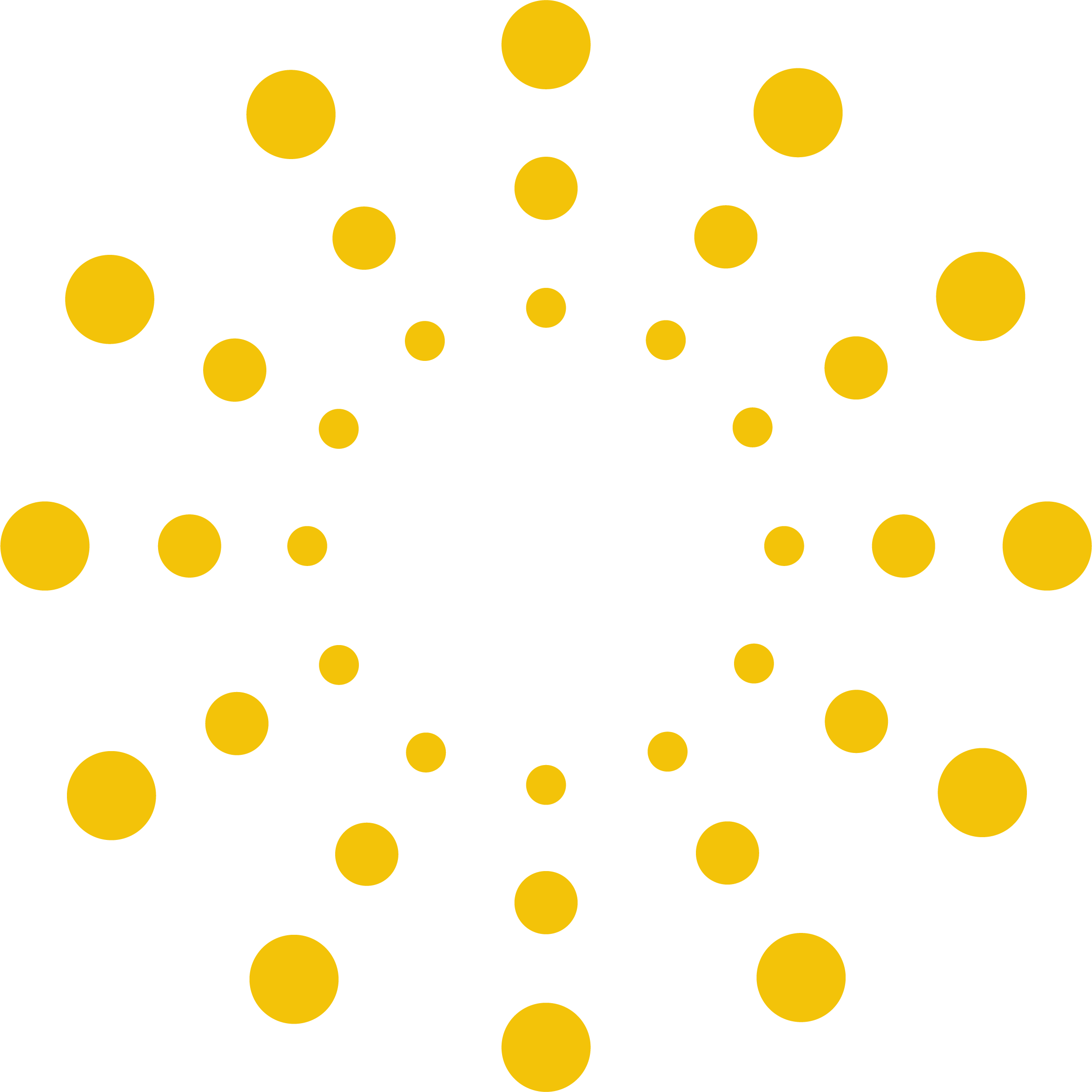
The NewDEL™ product groups of fiber-coupled LEDs were designed to deliver high performance operation from a system tailored to the user.
- High output power – High-power LEDs selected to maximize fiber coupling efficiency, advanced thermal engineering to ensure stable output
- An integrated driver/controller – Ready to go, out of the box
- Configuration options – Through a feature-rich Windows-based GUI or programmed using distinct serial commands
- Choice of operating modes – PWM, pulsed, and trigger modes
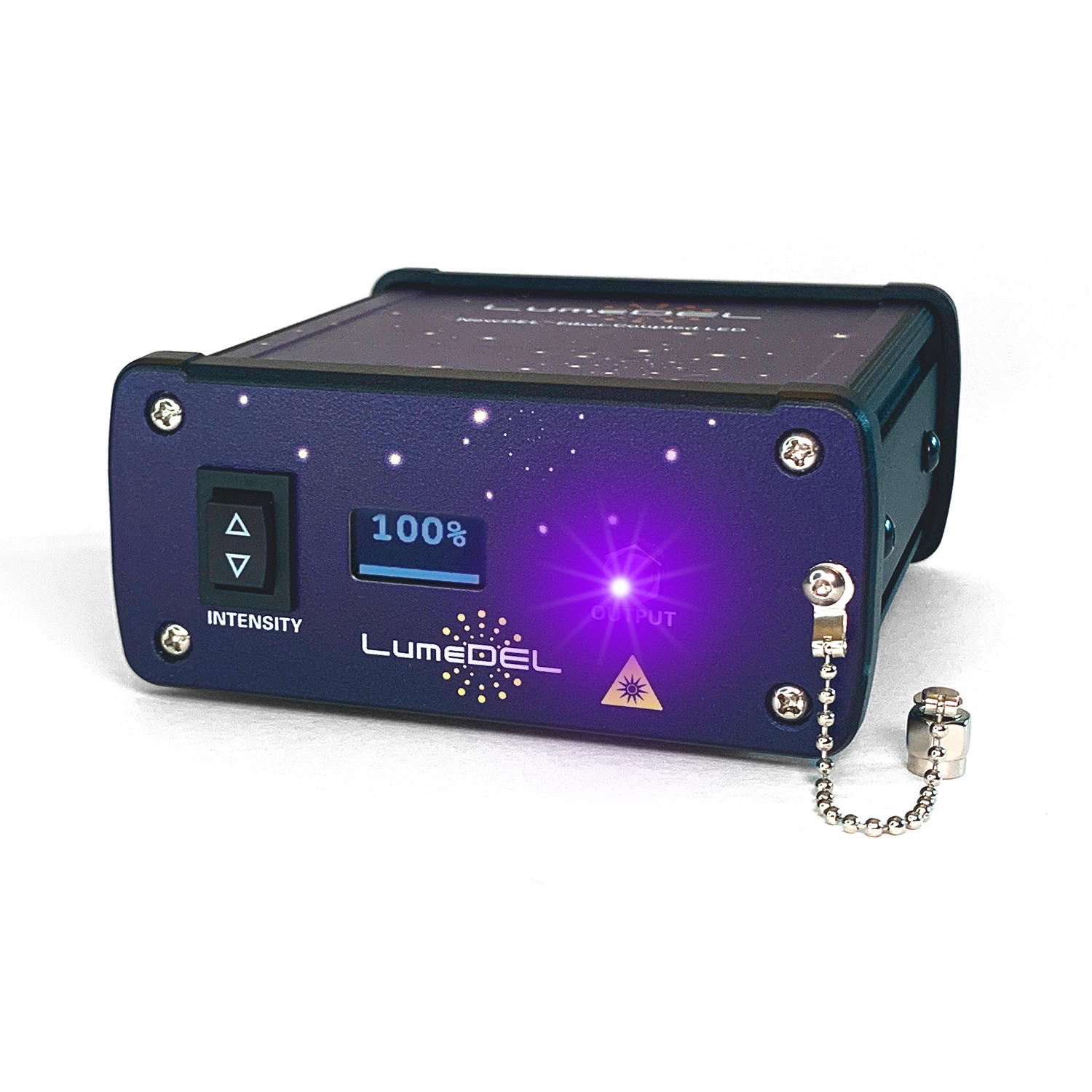
NewDEL™ UV
Narrowband
(275 nm to 405 nm)
See ALL models
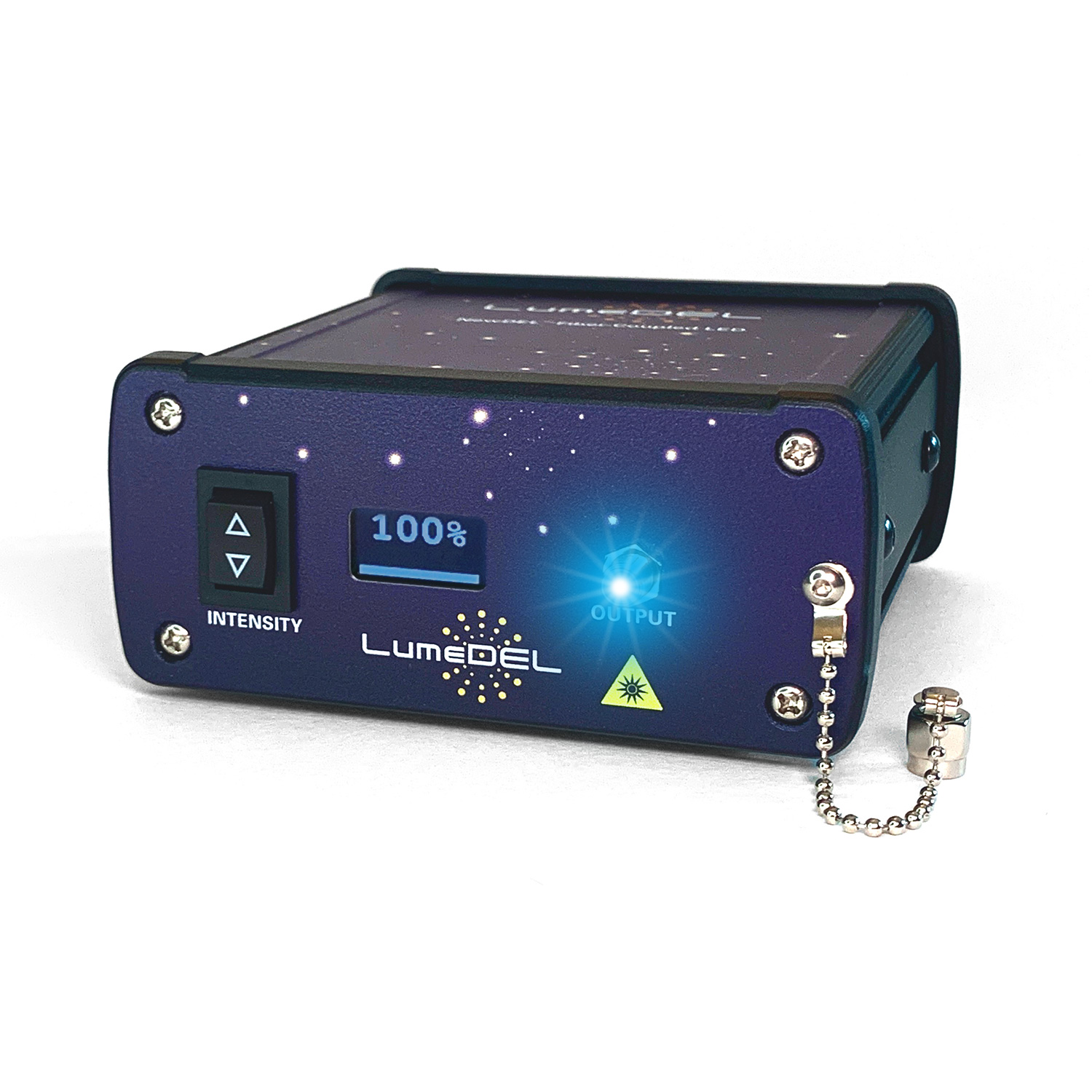
NewDEL™ VIS
Narrowband
(455 nm to 680 nm)
See ALL models
NewDEL™ NIR
Narrowband
(750 nm to 910 nm)
See ALL models
NewDEL™ BB
Broadband
(330 nm – 1100 nm)
See ALL models
Applications
LumeDEL’s NewDEL™ fiber-coupled LEDs target requirements for life sciences, medical, scientific, and industrial applications that require stable illumination at specific wavelengths and/or radiant powers to achieve success.
Spectroscopy

Optogenetics
Photodynamic Therapy (PDT)

Fluorescence-Guided Surgery
Why LumeDEL?
For LumeDEL, supporting the research and test community with the tools they need to succeed is more than just a product design objective – it’s at the core of our philosophy as an organization. We know that requirements and skills change from user to user and even project to project. That’s why we engineered the NewDEL to maximize both performance and flexibility. Want the advantages of fiber-coupled LEDs but lack the resources to work with the products currently on the market? The NewDEL is ready to go right out of the box. Have experience in programming and lab automation? You can set up hands-free and even remote operation.
We designed NewDEL fiber-coupled LEDs for ease of customization, which allows us to satisfy specialty requirements and support innovation. At LumeDEL, we don’t just sell you what we have, we build you what you need. And because we’re sized for collaboration, we’re ready to work together to help you realize your vision.
Latest News
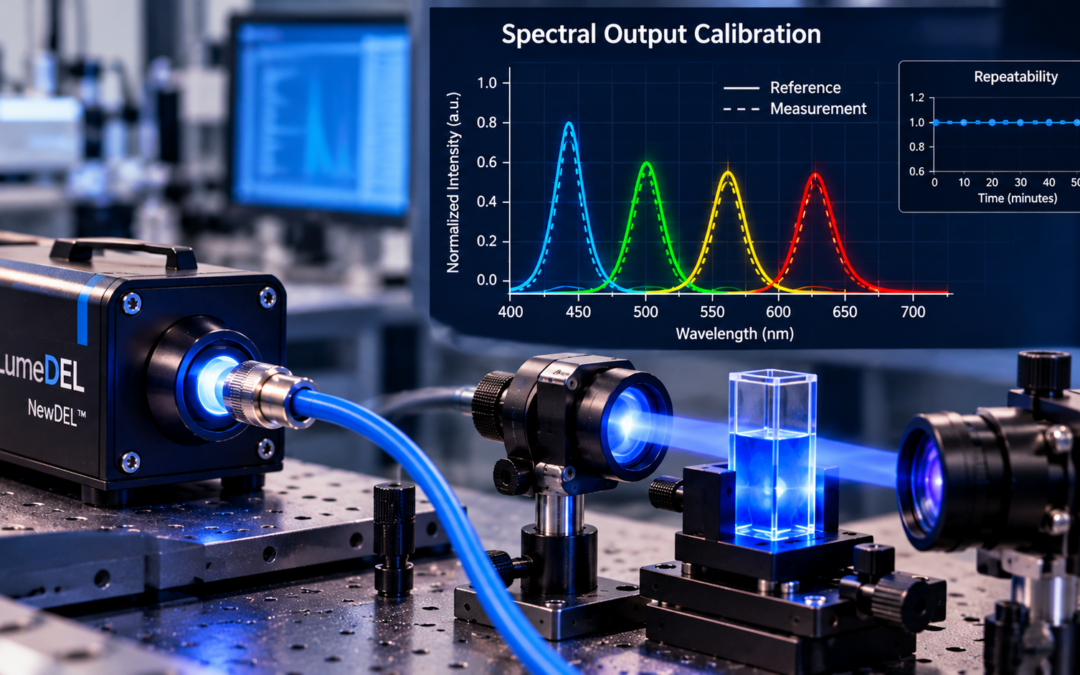
Calibrating Optical Systems for Consistent and Repeatable Measurements
Reliable optical measurements depend on more than sensitive detectors and sophisticated analysis software. Every component in the optical path can influence the final result, including the illumination source. Calibration helps establish a known reference point so measurements collected at different times, under different conditions, or across multiple instruments can be meaningfully compared. For spectroscopy, imaging, sensing, fluorescence, and other analytical applications, stable and repeatable illumination is an important part of maintaining calibration and measurement confidence. Why Optical Systems Require Calibration Optical instruments convert interactions between light and a sample into measurable information. Over time, system behavior can change because of factors such as: Illumination source variation Detector response Optical alignment Component aging Temperature Contamination of optical surfaces Changes in fiber or connector performance Calibration helps identify or...
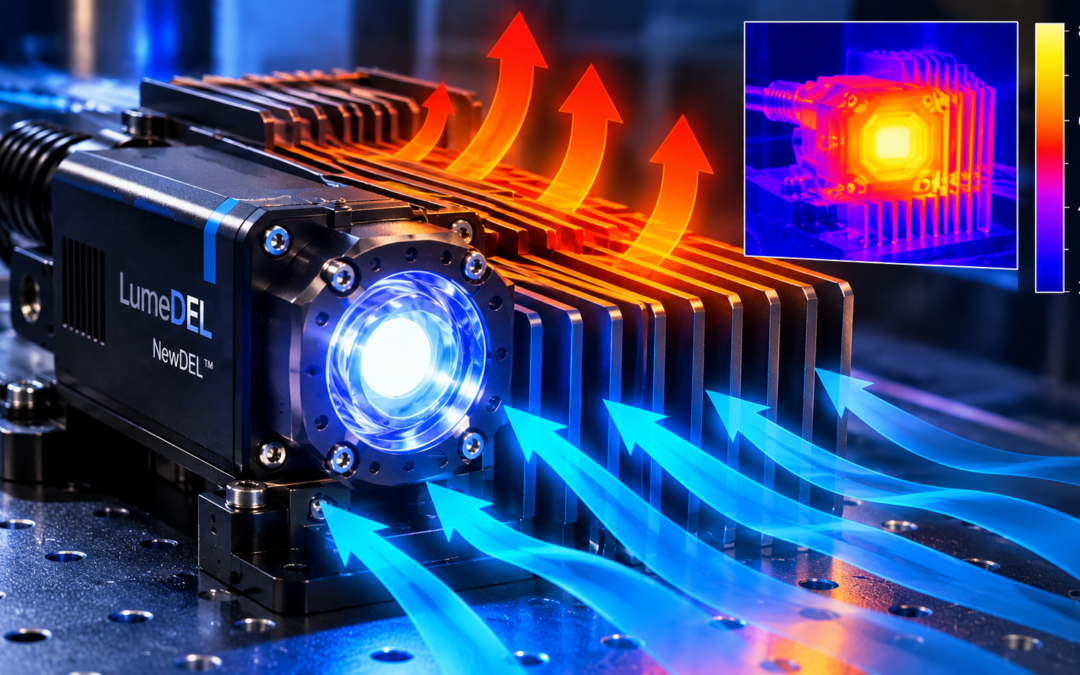
Thermal Management in High-Power LED Systems
High-power LEDs provide significant advantages for scientific, industrial, and OEM optical systems, including high radiant output, precise wavelength selection, long operating life, and compact design. However, achieving consistent performance requires more than selecting an LED with the appropriate optical specifications. As LED power increases, thermal management becomes an important part of system design. Excess heat can affect optical output, wavelength characteristics, efficiency, stability, and component life. Effective thermal management helps an LED source maintain predictable performance throughout extended operation and demanding measurement cycles. Why High-Power LEDs Generate Heat LEDs are highly efficient compared with many traditional illumination technologies, but not all electrical energy supplied to an LED is converted into useful optical output. Some energy becomes heat. In lower-power applications, this thermal load may be relatively easy to manage....
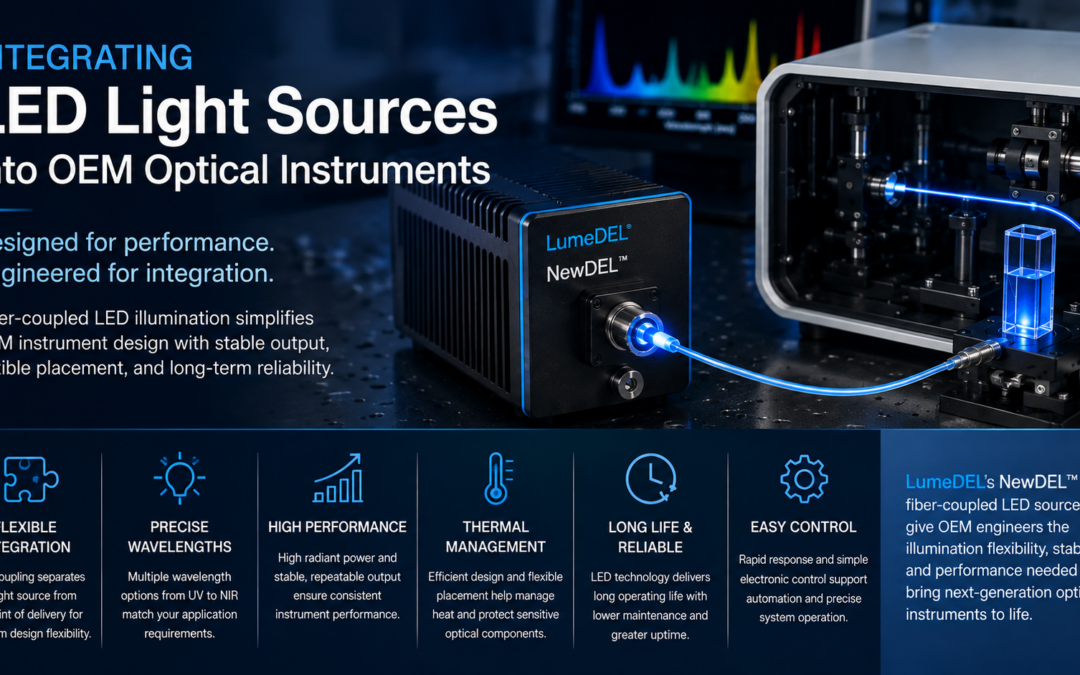
Integrating LED Light Sources into OEM Optical Instruments
Introduction Illumination is a critical component of many OEM optical instruments. Whether a system is designed for spectroscopy, imaging, sensing, medical research, or analytical measurement, the light source must provide the required optical performance while fitting within the physical and operational requirements of the instrument. Modern LED technology offers OEM designers an alternative to traditional lamp-based illumination with advantages that include compact size, long operating life, stable output, precise wavelength selection, and efficient control. Fiber-coupled LED sources provide additional design flexibility by allowing the illumination source to be positioned independently from the point where light is delivered. Start with the Optical Requirements Successful integration begins by defining what the instrument needs from its illumination system. Important optical considerations include: Required wavelength or spectral range Radiant power Output stability Fiber...