
Antimicrobial Blue Light (aBL) therapy
LumeDEL’s fiber-coupled LEDs deliver stable blue light at specific wavelengths, supporting innovative antimicrobial blue light (aBL) therapy research and applications.
Antimicrobial blue light (aBL) therapy
With the rise of antibiotic resistance around the globe, the healthcare community needs new ways to treat persistent infections. Blue light (400-470 nm) irradiation has demonstrated immense promise as an alternative approach for cases where drug-based treatment options have run out. Compared to UVGI, aBL has a lower germicidal efficiency, but it can be used at levels that are lethal to microorganisms without affecting exposed mammalian cells. Treating microbial infections with aBL imposes few or no side effects on humans or animals. Studies have shown aBL can be effective against bacteria, fungi, viruses, and parasites.
Research is underway around the globe to quantify doses and wavelengths for optimal results. Some studies have indicated that the effectiveness depends on the strain of bacteria involved but aBL still represents an important new weapon for the treatment of humans and animals, alike.
The NewDEL™ Advantage for aBL:
- High radiant power
- Pulse-width modulated (PWM) dimming for tight control of radiant power with stable output wavelength
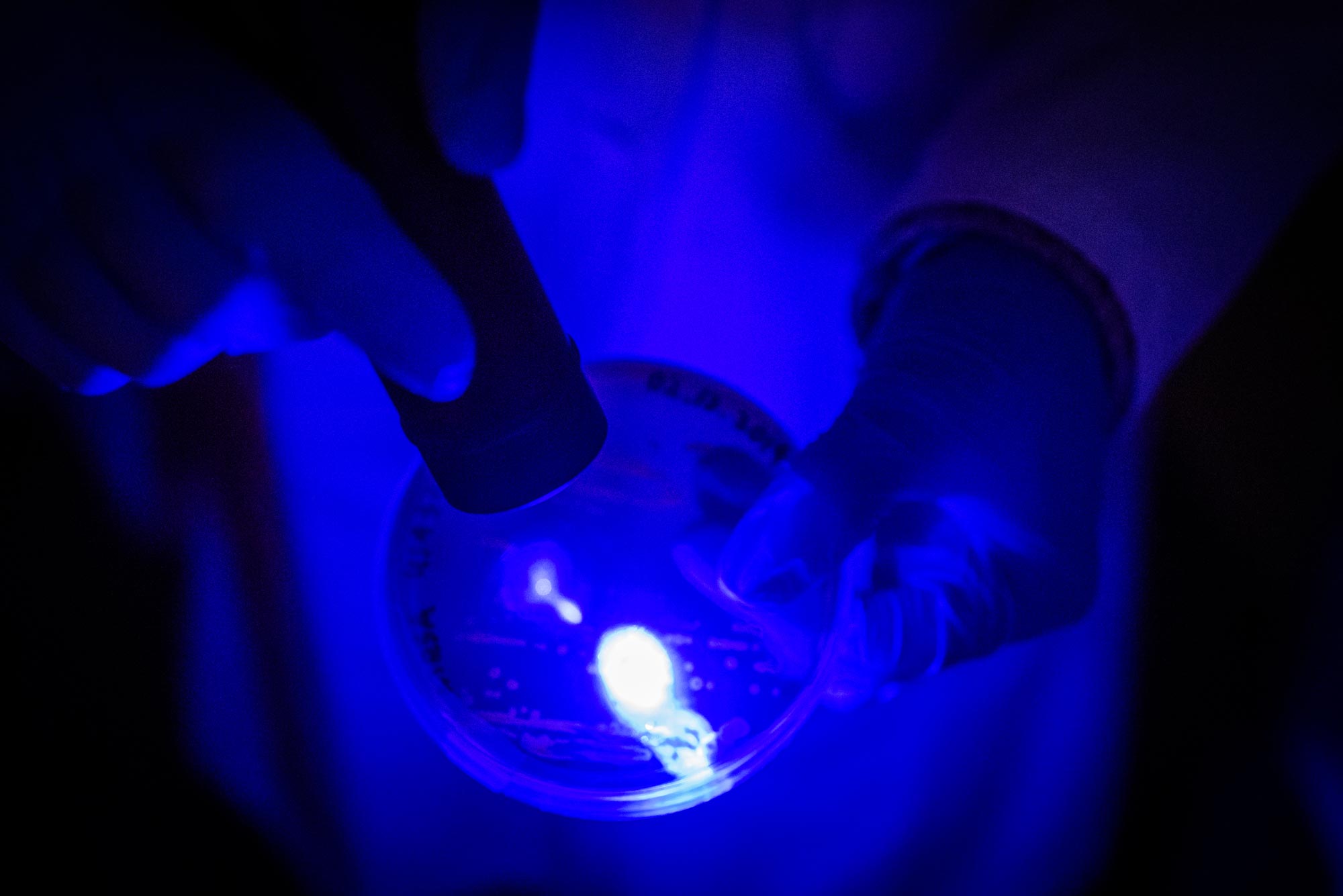
Why LEDs for Antimicrobial Blue Light (aBL) Therapy?
Antimicrobial Blue Light therapy uses visible blue wavelengths to inactivate bacteria without the risks associated with ultraviolet exposure. LumeDEL’s NewDEL™ fiber-coupled LEDs deliver stable, narrowband blue light at germicidal wavelengths, providing consistent performance for medical and scientific research. Their fiber-coupled design ensures precise light delivery into clinical instruments and experimental systems.
Key Benefits of LEDs in aBL Therapy
-
- Narrowband blue wavelengths → effective against bacteria while remaining safe for human tissue
- Stable light output → improves reproducibility in clinical and preclinical studies
- High radiant power → ensures efficient bacterial inactivation within shorter exposure times
- Fiber-coupled precision → directs blue light exactly where needed in therapeutic devices or test systems
- Long-life, compact design → reliable for ongoing medical research and lab use
Challenges in aBL Therapy (and LED Solutions)
Challenge 1: Ensuring safe, controlled light exposure
Solution: Narrowband LEDs provide precise wavelength output, minimizing unintended effects.
Challenge 2: Variability with older light systems
Solution: LEDs deliver stable illumination across repeated experiments and treatments.
Challenge 3: Integration into research and medical devices
Solution: Fiber coupling enables easy adaptation into laboratory setups and clinical instruments.
Applications of LumeDEL LEDs in aBL Therapy
-
- Research on hospital-acquired infection prevention
- Dental and oral antimicrobial studies
- Dermatology and wound care therapies
- Development of antimicrobial devices and systems
- Academic and clinical research programs
Frequently Asked Questions (FAQ)
How does antimicrobial blue light work?
Blue light excites endogenous molecules in bacteria, generating reactive oxygen species that kill the cells without harming surrounding tissue.
Why use LEDs instead of UV for antimicrobial research?
Blue LEDs provide antimicrobial effects without UV-related risks, making them safer for research involving living tissues.
Can fiber-coupled blue LEDs integrate into medical devices?
Yes — fiber coupling allows precise delivery into handpieces, instruments, or clinical research tools.
Call to Action
Advance antimicrobial research with safe, narrowband blue LED sources. Explore LumeDEL’s recommended models designed for Antimicrobial Blue Light Therapy.