
Spectroscopy
LumeDEL’s NewDEL™ fiber-coupled LEDs deliver stable, high-radiant power light at precise wavelengths, making them ideal for spectroscopy in life sciences, medical, and industrial research.
Spectroscopy
Spectroscopy is a nondestructive optical technique for identifying and quantifying the various chemical components in a sample by matching the reflectance or transmittance spectra to established spectral signatures. The technology is in broad use, with applications across a range of market sectors, including industrial, life sciences, medical, and scientific.
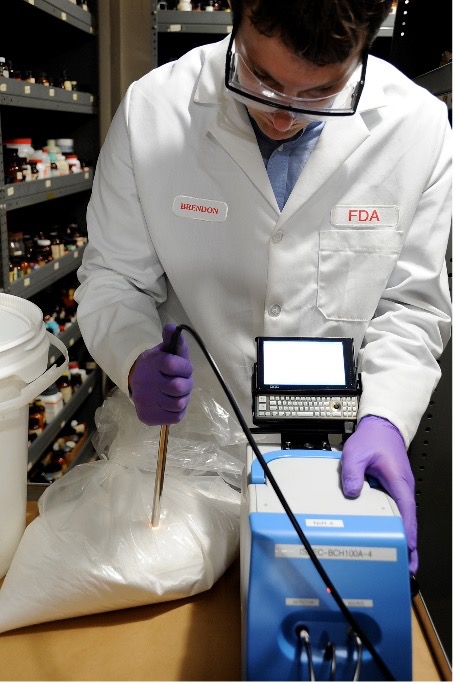
NIR spectroscopy (NIRS) is used for quality control and nondestructive testing of raw materials and end products in industries such as food and beverage production, pharmaceutical manufacturing, and polymer synthesis. The technology supports rapid, nondestructive analysis for everything from acceptance testing to process control. Miniaturized NIRS units under development would enable consumers to monitor ingredients in their food, check food freshness at the supermarket, and verify medication quality.
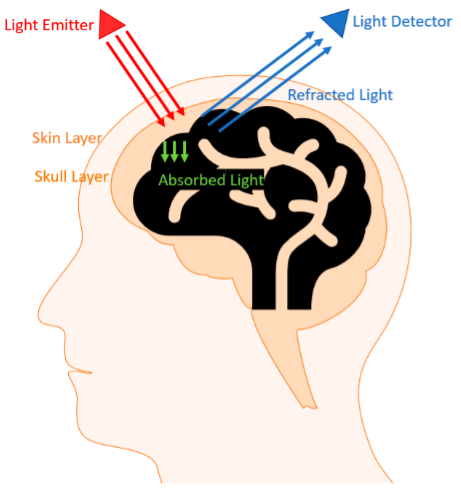
Functional near-infrared spectroscopy (fNIRS) uses near-IR light (650–1000 nm) light to monitor tissue oxygenation non-invasively and continuously. The technology was originally developed to detect hemoglobin changes in the brain to assess oxygen saturation. Cranial bones block visible light, but near-IR light penetrates. Early studies focused on brain-function mapping but fNIRS now has applications in medical diagnostics and therapeutics. With the success of these initial efforts, researchers are using fNIRS to evaluate oxygenation of tissues elsewhere in the body.
In the semiconductor industry, spectral reflectometry (380 nm-1050 nm) is widely used for thin film metrology and for plasma etching endpoint control. The technique delivers quantitative results instantly and accurately. It is generally applied in mainstream fabrication settings.
Downtime in a semiconductor fab can cost $1 million or more per hour, making equipment reliability critical. Fiber-coupled LEDs offer lifetimes of up to 50,000 hours. By replacing mercury arc lamps with LED light sources, manufacturers can reduce unplanned downtime and maintain throughput.
The NewDEL™ Advantage for Spectroscopy:
- Two white light models available, as well as a continuum source
- Choice of operating modes – manual to completely programmable remote control
- Highly configurable, including pulsed or triggered operation
Why Broadband LEDs for Spectroscopy?
Spectroscopy requires reliable light sources that can span multiple wavelengths. LumeDEL’s NewDEL™ broadband fiber-coupled LEDs provide stable output across UV, visible, and near-infrared ranges, making them an effective replacement for traditional lamps. Researchers benefit from compact, long-life sources that deliver consistent illumination without the maintenance burden of arc or halogen lamps.
Key Benefits of Broadband LEDs in Spectroscopy
-
- Wide spectral coverage → suitable for absorption, reflectance, and fluorescence studies
- Stable spectral output → reduced need for recalibration and more consistent results
- Long operating life → LEDs last thousands of hours compared to short-life lamps
- Compact design → saves valuable bench space and integrates easily into systems
- Efficient performance → lower heat generation, protecting sensitive samples
Challenges with Traditional Light Sources (and the LED Advantage)
Challenge 1: Frequent replacement and downtime
Solution: Broadband LEDs last significantly longer, minimizing interruptions.
Challenge 2: Spectral instability and drift
Solution: LumeDEL LEDs maintain stable output, reducing error and repeat testing.
Challenge 3: Bulky, power-hungry setups
Solution: LEDs offer compact, energy-efficient alternatives that integrate into modern labs.
Applications of Broadband LEDs in Spectroscopy
-
- Absorption and transmission spectroscopy
- Fluorescence and luminescence studies
- Environmental monitoring of air and water samples
- Medical diagnostics and imaging research
- Quality control in industrial and academic labs
Frequently Asked Questions (FAQ)
Why are broadband LEDs preferred over traditional lamps in spectroscopy?
They deliver long-life, stable illumination across a wide spectrum, eliminating frequent lamp changes and drift issues.
Do broadband LEDs cover UV as well as visible and NIR ranges?
Yes — LumeDEL’s broadband models are designed to span UV through NIR, making them versatile for multiple spectroscopy techniques.
Can fiber-coupled LEDs be integrated into existing systems?
Absolutely — fiber coupling allows direct, efficient delivery of light into optical instruments with minimal alignment issues.
Call to Action
Looking to replace outdated lamps with stable, broadband LED sources? Explore LumeDEL’s recommended models designed for spectroscopy.