
LEDs for Photobiomodulation
LumeDEL’s fiber-coupled LEDs deliver stable, targeted light at specific wavelengths, making them ideal for advancing photobiomodulation research and therapeutic applications.
Photobiomodulation
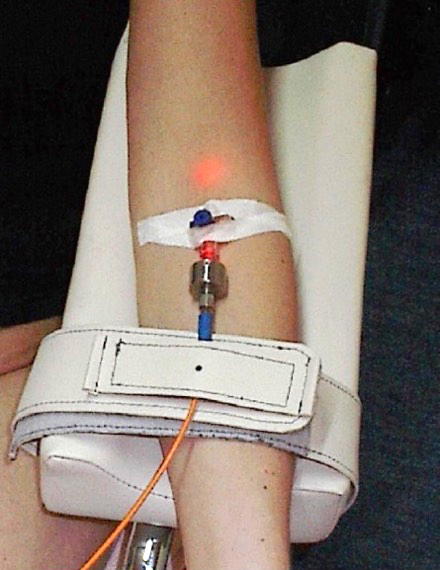
Red and near-IR light (600-1000 nm) are being explored for their potential to address a variety of medical conditions by altering function at a cellular level. Known as photobiomodulation, the technique is under investigation for wound treatment, tissue repair, pain management, treatment of traumatic brain injury, and more. Although some results are promising, possible mechanisms are still subject to debate and the majority of studies focus on animal models or in vitro samples.
Intravenous blood irradiation is another low-level light treatment modality. It has a long history of use on multiple conditions.
Much more research and rigorous clinical trials need to be conducted to establish a solid scientific foundation – and that is where fiber-coupled LEDs come into play.
Early work used laser light sources, but the power levels have the potential to cause tissue damage. The focus has shifted to LEDs. Red and near-IR fiber-coupled LEDs provide highly configurable narrowband output can equip investigators to conduct well-controlled studies to determine which parameters will provide repeatable results.
The NewDEL™ Advantage for Photobiomodulation:
- High radiant power and pulsed modes of operation
- Easy control of parameters like pulse width
Why LEDs for Photobiomodulation?
Photobiomodulation depends on precise delivery of red and near-infrared light to stimulate cellular activity, enhance healing, and reduce inflammation. LumeDEL’s NewDEL™ fiber-coupled LEDs provide stable, high-radiant power output at therapeutic wavelengths, ensuring accurate dosing and reproducible results in both research and clinical applications.
Key Benefits of LEDs in Photobiomodulation
-
- Targeted red & NIR wavelengths → aligned with cellular absorption peaks (≈630–850 nm)
- Stable light output → ensures consistent treatment results across sessions
- High radiant power → effective penetration into tissue for in-vitro and in-vivo studies
- Fiber-coupled precision → delivers light exactly where it’s needed in experimental or therapeutic setups
- Long-life, compact design → reliable for daily use in research and clinical environments
Challenges in PBM (and LED Solutions)
Challenge 1: Inconsistent power delivery from older systems
Solution: LumeDEL LEDs provide stable, repeatable illumination.
Challenge 2: Limited penetration depth in tissue
Solution: Narrowband red and NIR LEDs reach deeper layers compared to visible light.
Challenge 3: Bulky or high-maintenance light sources
Solution: Compact, solid-state LEDs simplify integration and reduce upkeep.
Applications of LumeDEL LEDs in Photobiomodulation
-
- Wound healing and tissue regeneration research
- Reduction of inflammation in preclinical studies
- Neurological and cognitive therapy research
- Musculoskeletal rehabilitation studies
- Academic and translational medical research
Frequently Asked Questions (FAQ)
Why use red and near-infrared LEDs for PBM?
These wavelengths penetrate tissue effectively and align with mitochondrial chromophore absorption for cellular stimulation.
How do LEDs compare with lasers in PBM?
LEDs provide stable, targeted wavelengths with lower cost, less heat, and easier integration into lab setups.
Can fiber-coupled LEDs deliver localized PBM treatment?
Yes — fiber coupling allows precise light delivery to specific tissues or small research models.
Call to Action
Advance your PBM research with stable, narrowband LEDs tuned for red and NIR light. Explore LumeDEL’s recommended models designed for Photobiomodulation.