Aug 31, 2026 | Blog
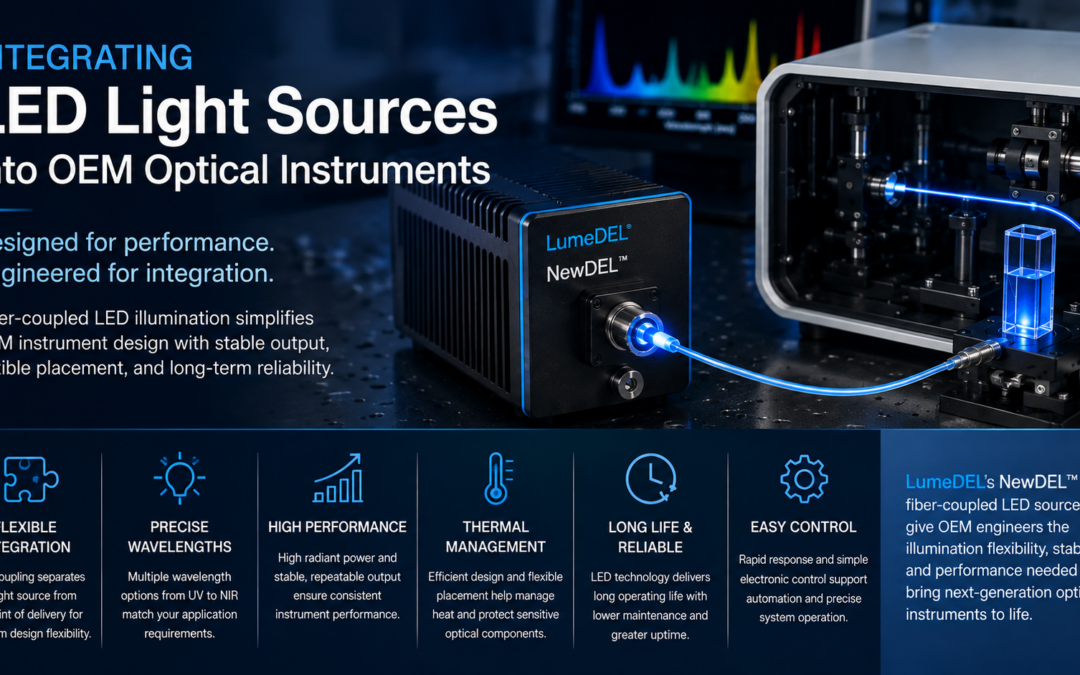
Introduction Illumination is a critical component of many OEM optical instruments. Whether a system is designed for spectroscopy, imaging, sensing, medical research, or analytical measurement, the light source must provide the required optical performance while...
Aug 31, 2026 | Blog
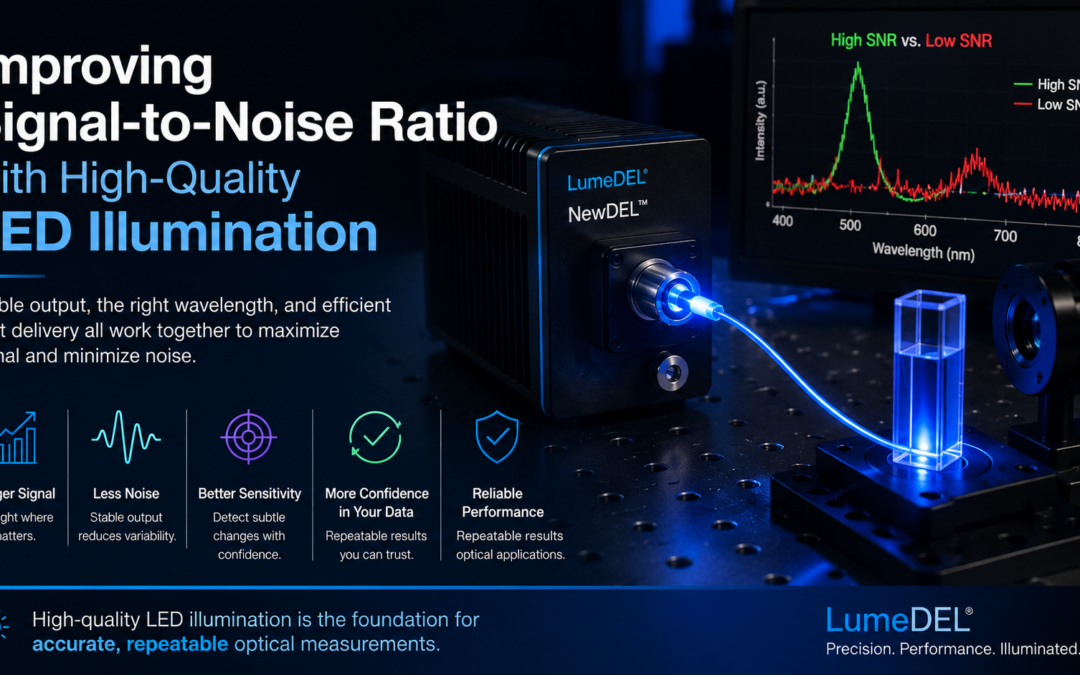
Introduction In optical measurement systems, generating a strong signal is only part of the challenge. The ability to distinguish meaningful optical information from background noise is equally important. Signal-to-noise ratio (SNR) is a key measure of performance in...
Jul 16, 2026 | Blog
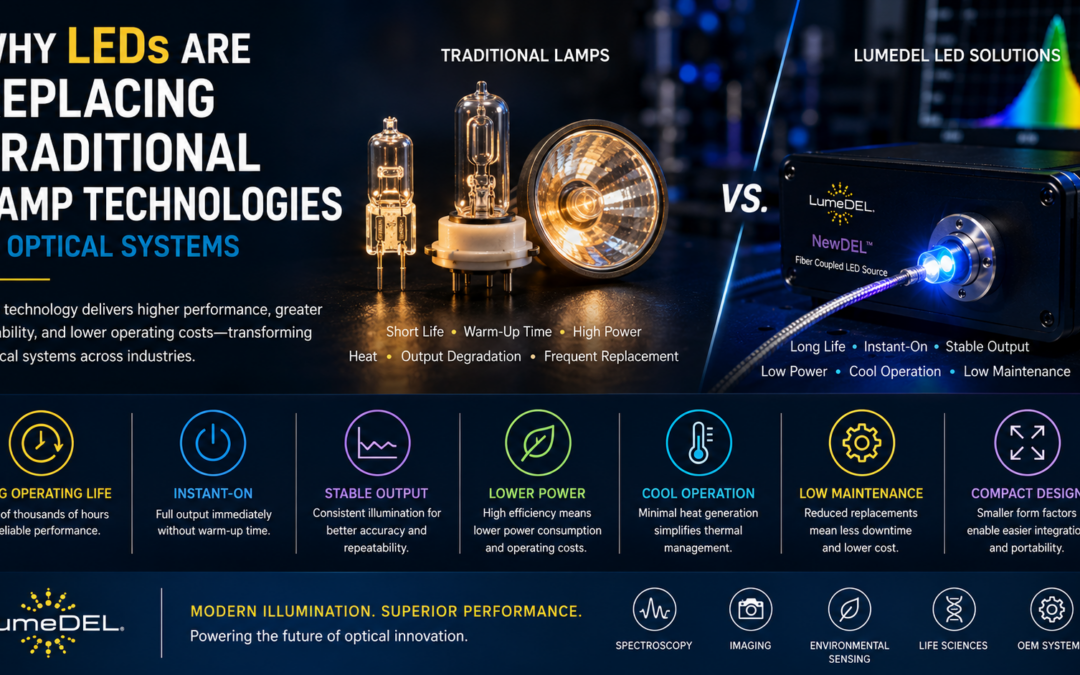
Introduction For decades, halogen, xenon, and mercury lamps served as the primary illumination sources for scientific instrumentation and optical analysis. Today, advances in LED technology have transformed the industry, offering higher efficiency, longer operating...
Jul 16, 2026 | Blog
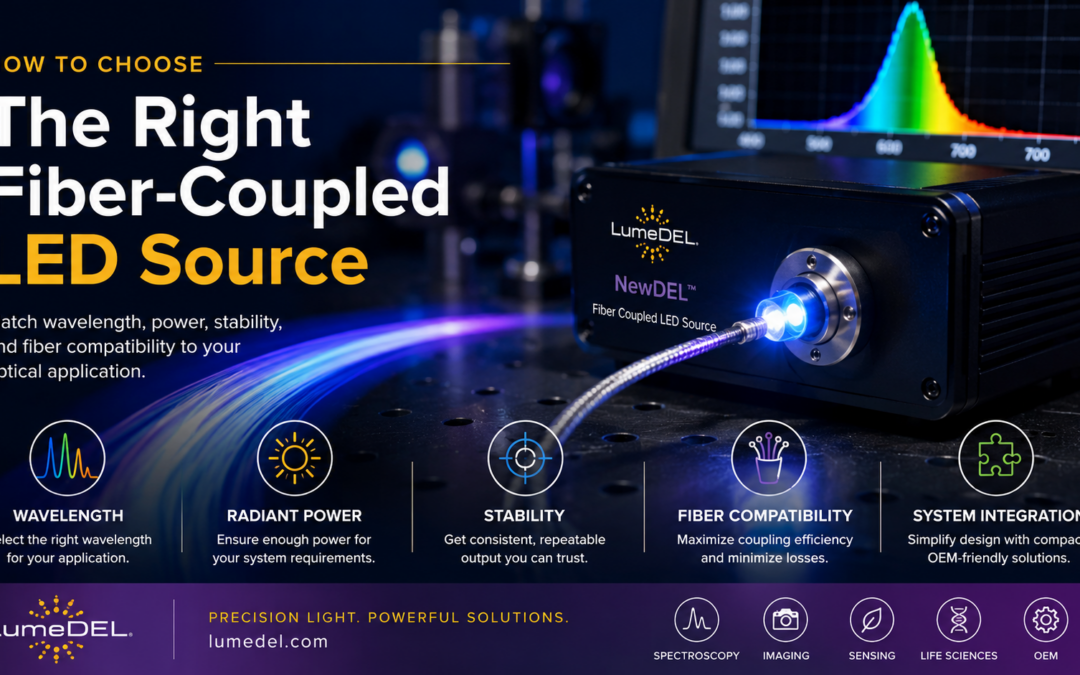
Introduction Selecting the right fiber-coupled LED source is one of the most important decisions when designing an optical system. The ideal illumination solution depends on several factors, including wavelength, radiant power, fiber compatibility, stability, and the...
Jun 9, 2026 | Blog
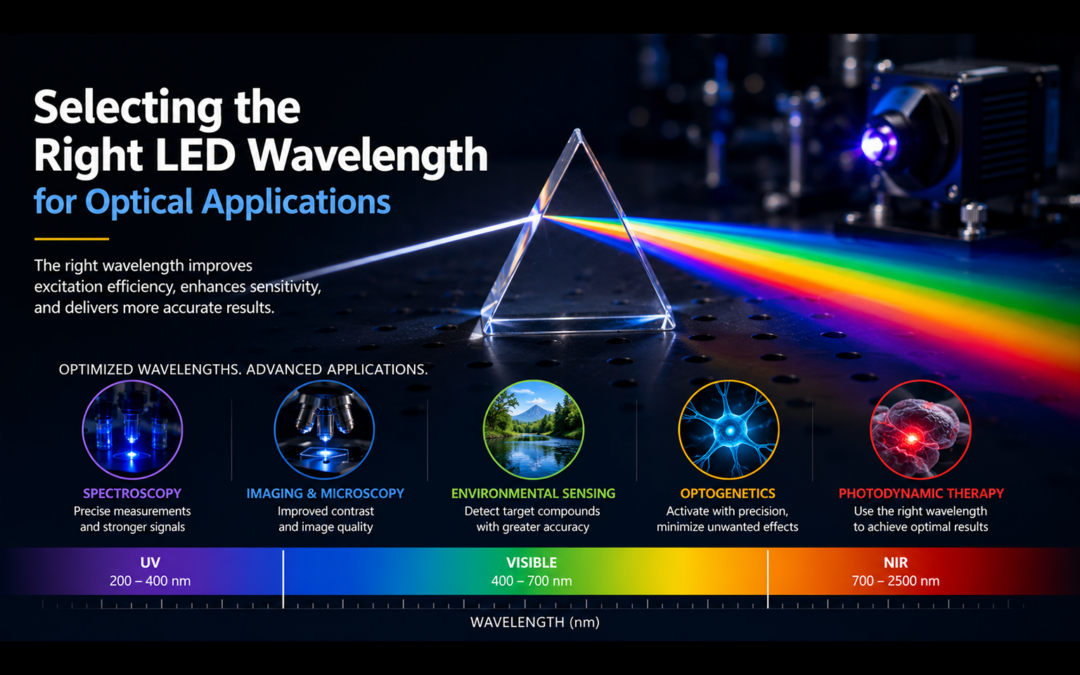
Choosing the correct LED wavelength is one of the most important decisions when designing optical and analytical systems. The wavelength of the illumination source directly affects signal strength, measurement accuracy, excitation efficiency, and overall system...
Jun 9, 2026 | Blog
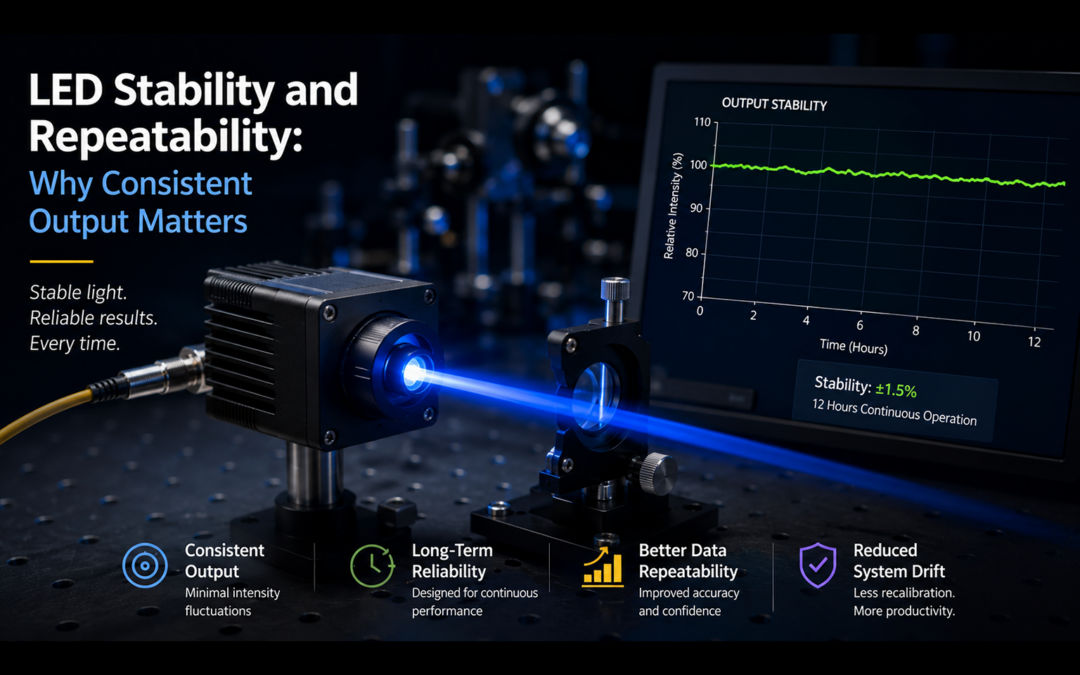
Introduction In many optical and analytical applications, illumination quality is measured not only by wavelength and radiant power but also by long-term stability and repeatability. Even minor fluctuations in light output can affect measurement accuracy, reduce...